
AI Isn't Your Competitive Advantage, Using It Well Is
Internet was the frontend innovation. AI is the backend.
It’s been three years since I wrote about how AI might transform industries like fashion. The outputs that seemed amazing then are now routine. We’ve made incredible progress on the multimodal side, yet it’s striking how little has changed in the day-to-day operations of even the biggest corporations with millions to spend. During my time at Visa, you were in the top 1% of AI users just by knowing how to use Copilot. This tracks with broader data: AI adoption among US firms more than doubled in the past two years, rising from 3.7% in fall 2023 to 9.7% in 2025, despite all the hype.

Since OpenAI's release of Codex in 2021, I’ve gone deeper down the rabbit hole of helping small to medium-sized businesses utilize AI productively. The best framework for understanding AI’s implications is very “Bezosesque”, focus on what will change and what will not change.
The Big Picture: AI is Economies of Scale 2.0
Most people don’t understand that while AI stocks may exhibit bubble-like characteristics, this misses the bigger story. Just as the internet transformed frontend user interfaces, creating marketplaces like Amazon, direct-to-consumer platforms like Shopify, and social networks like Facebook, AI will primarily transform the backend.
The data reveals a fascinating disconnect: 88% of organizations now use AI in at least one business function, yet only 9.7% of US firms have integrated it into actual production processes. There’s enormous room for growth.
Like crypto before it (and still), generative AI is in the awkward stage where there’s significant hype mixed with genuine innovation. A lot of low-quality work and lazy implementations exist in the delivery of AI services, but these will eventually be washed out.
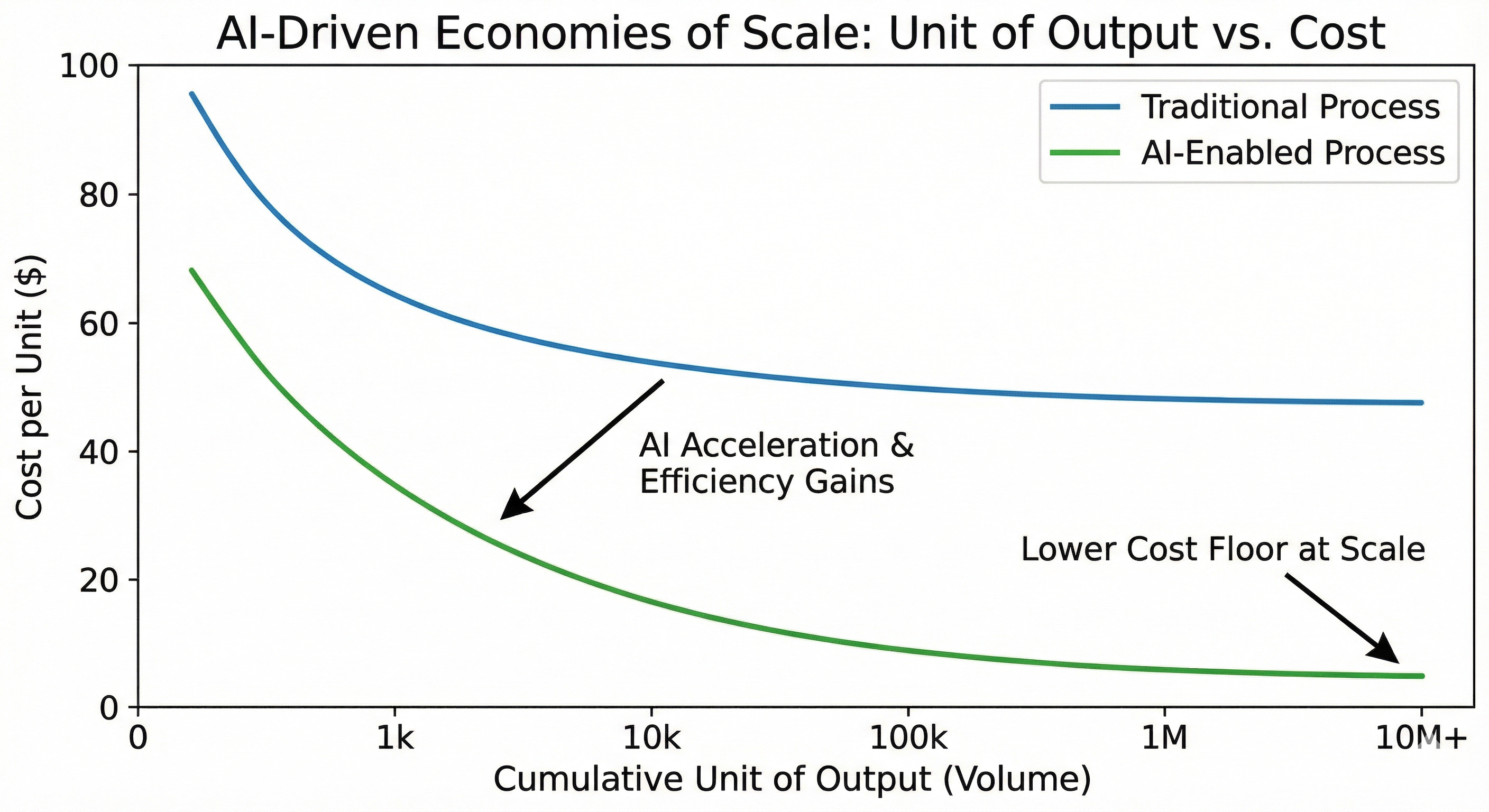
The big takeaway: AI will create economies of scale 2.0. In an increasingly digital and intelligence-driven world, the inputs won’t be physical resources but AI credits. A single AI credit will contribute more per unit of output in well-organized, future-ready organizations than in disorganized ones.
What WILL Change
1. Race to the Bottom (for AI Credit Prices)
Compute and AI credits will become dramatically cheaper. Inference costs dropped 280-fold between November 2022 and October 2024. By 2025, pricing has become intensely competitive, with the cheapest multimodal models already dipping under $0.10 per million tokens. This is just the beginning of a sustained race to the bottom.
Foundational LLMs will seek vendor lock-in through better UIs and capabilities before their models become commoditized. We’re seeing this play out:
Google: Building AI Studio (their vibecoding platform), creating a seamless developer ecosystem, and offering generous free credits to new builders (I’ve found these very useful when building MVP automations and apps)
OpenAI: Improving chat memory and creating physical devices
Anthropic: Focusing on becoming the best coding assistant via Claude Code and the go-to assistant for platforms like Lovable
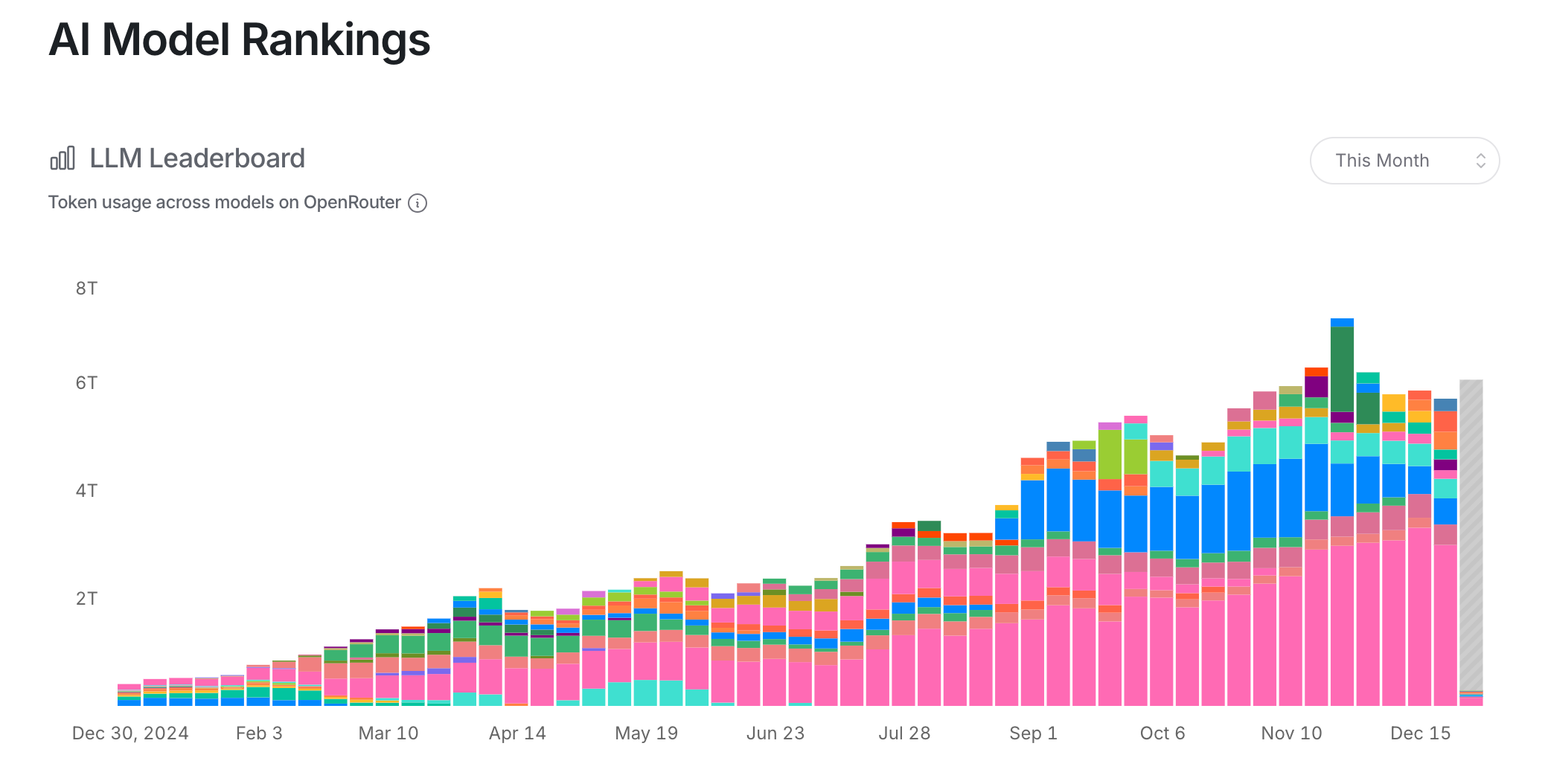
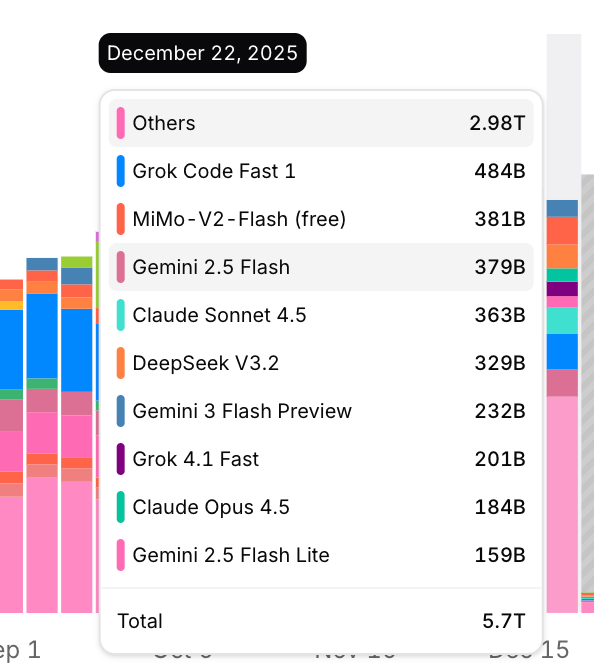
For AI enthusiasts in-the-know, it’s now easier than ever to switch LLM models in real-time through orchestration platforms like n8n (AI automations and backend), Openrouter, and Higgsfield (image and video generation). Different LLMs have different advantages: OpenAI excels all-around, Claude dominates coding and writing, and Gemini provides seamless access to the Google ecosystem like YouTube scripts.
Assuming no single monopoly emerges, the biggest victors are end users through lower AI compute credit prices and incentivization campaigns. AI credits are currently loss leaders, and this competition will drive AI adoption.
2. Software Becomes Commoditized
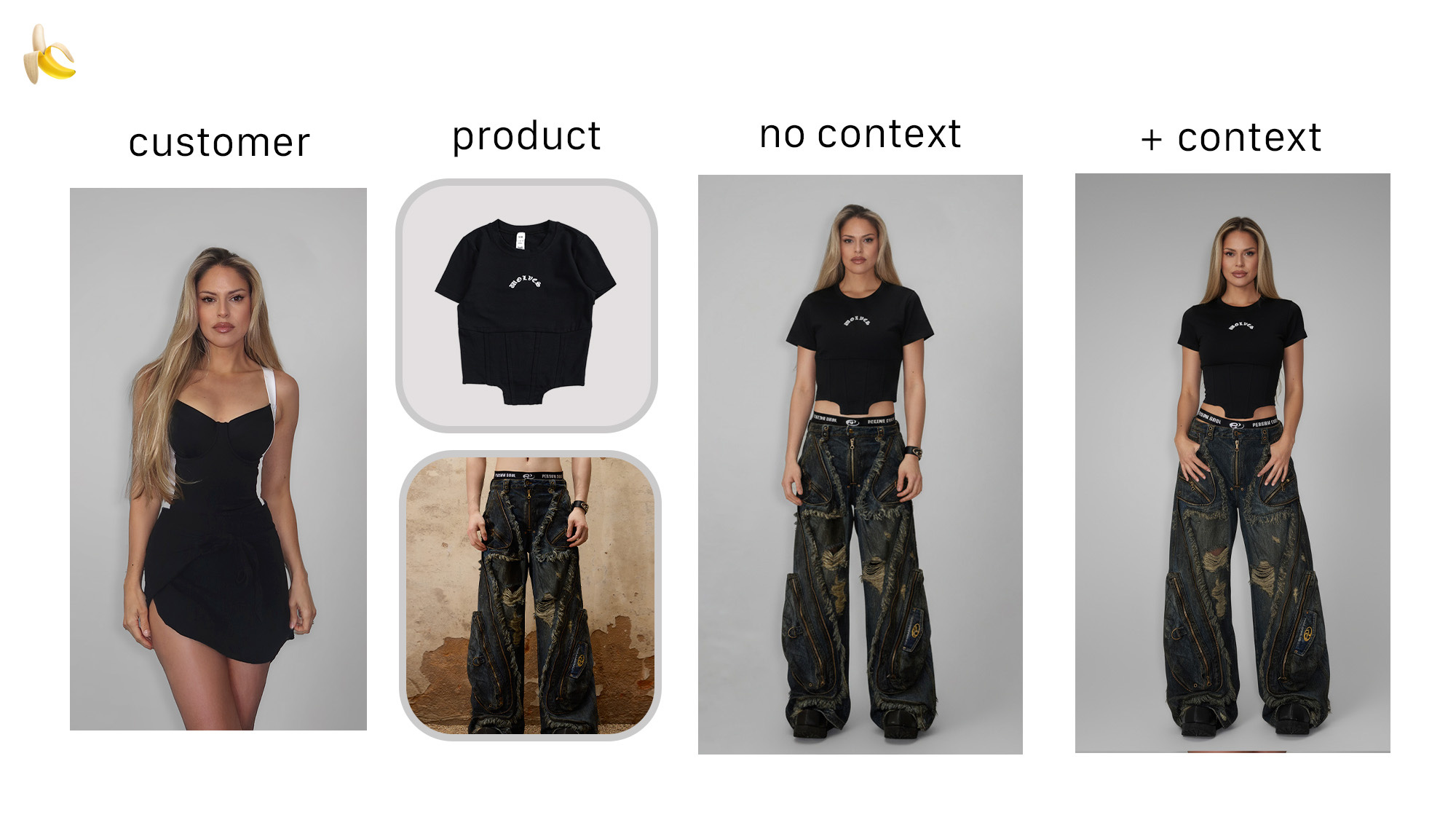
Just a year ago, startups focused on virtual fashion fitting. Now anyone with a Google Gemini account can achieve the same or better quality for free.
Apps are racing to achieve user lock-in before LLM providers make it easy enough for those apps to be “vibecoded” with a single-shot prompt. In my opinion, there are only two ways to win in AI software:
Vertical Integration: Becoming the go-to app in a specific industry where switching becomes a hassle even if better solutions exist (think Salesforce or Microsoft Copilot).
AI Orchestration: Instead of building on top of ChatGPT or Gemini, let them build on top of you. Create infrastructure where LLM advancement doesn’t replace your product but enhances it.
Most capable organizations will find it increasingly easy to create customized SaaS and systems through internal teams or partnerships with third-party builders (which is what I’m helping companies do).
3. The Rise of Made-to-Order Software
A common criticism of AI is that it still cannot handle tasks the way humans can. Although I disagree with this, especially for menial and systematic tasks, even the areas where humans are still better are under attack. Remember: today’s AI is as bad as it will ever be. It will only improve from here.
I should know. I’ve created AI voice receptionists that handle bookings, automated AI UGC videos, social media best practices listening tools, invoice reminders, customized zip code presentation makers (based on Zillow data and user input), Reddit trending topic listening tools, and lead scrapers and enhancers.
This leads to another interesting trend: made-to-order software. With a few backend automations and API requests, we can now recreate SaaS offerings. While out-of-the-box software is arguably easier to use, made-to-order software allows for unprecedented customization. For example, with a social media listening tool, what if you want to create an index of creators to follow or have fine-tuned filters uncommonly found in current software, like repost-to-like ratio instead of like-to-view ratio? Not to mention the benefits of inputting your own proprietary and private data to improve outputs.
And all this is only getting easier with tools like Claude Code.
Example of a model real estate lead qualification agent demo I made: https://realestate.evoaai.com/

Case Study: Building Avelora Hair Serum from Scratch with AI
Just a year ago, launching a beauty brand required tens of thousands of dollars in product photography, lifestyle shoots, and marketing materials. Traditional routes meant hiring photographers, models, stylists, and spending weeks coordinating shoots.
To demonstrate just how accessible this has become, I created Avelora, a proof-of-concept hair serum brand, using only AI tools. Using a combination of Nano Banana and ChatGPT for images and Sora for video content, I built an entire visual brand identity in a fraction of the time and cost.
The Results:


Professional product shots with perfect lighting, texture detail on the glass bottle, and clean composition. The amber serum, white dropper cap, and green label all render with the kind of material accuracy you’d expect from a studio shoot.


Realistic usage shots showing the product in action. The hand positioning, hair texture, lighting, and skin tones all look natural. These are the kinds of aspirational lifestyle images that traditionally require professional models, makeup artists, and photographers.

Ingredient breakdown showing natural components (rosemary, eucalyptus, saw palmetto, etc.) arranged professionally with labels. This type of educational marketing content would typically require product styling and specialized photography.
To demonstrate the power of AI for localization, I created four separate UGC-style videos featuring country-specific avatars speaking in different languages. Each video presents the same product but tailored for local markets, with culturally appropriate messaging and native speakers.
What traditionally would have required hiring local creators in multiple countries, coordinating shoots across time zones, and managing translation services, now takes a fraction of the time and cost. This is hyper-local marketing at scale, something previously only accessible to major corporations with substantial budgets.
While still not 100% perfect, a year ago, AI-generated imagery had telltale signs of artificiality. Now, these images are, at times, indistinguishable from professional photography. The videos with native speakers in multiple languages are equally convincing. Without disclosure, most consumers couldn’t tell these weren’t shot in a studio with real models and local creators.
A solo entrepreneur can now execute marketing strategies that previously required multinational corporations.
4. Strategic Skills Trump Technical Execution
The conventional wisdom says photographers who understand lighting and camera mechanics will be most valuable. I believe the opposite: technical execution will be the first thing to go.
We’ve seen this pattern before. Audio engineers used to be essential to music production, requiring deep technical knowledge of recording equipment and mixing boards. Today, most music producers work almost exclusively with preprogrammed samples and digital tools. The technical knowledge became commoditized.
The same will happen with visual content. Consider fashion’s master craftsman Cristóbal Balenciaga, who personally cut, draped, assembled, and hand-sewed every garment. Coco Chanel called him “the only couturier.” Yet Chanel and Christian Dior, who functioned more as visionary creative directors, sketching concepts and overseeing large ateliers, built equally legendary houses. They orchestrated teams of skilled artisans rather than executing everything themselves.
In the AI era, we need more Chanels and Diors, not more Balenciagas. The hands-on craftsperson who can execute every technical detail will be displaced by AI. The visionary who can articulate a vision and orchestrate tools will thrive.
The skills that will actually matter are:
Strategic positioning: Understanding your market and differentiation
Visual literacy: Knowing what good looks like without needing to execute it yourself
Cultural awareness: Understanding the current meta and trends
Game theory: Anticipating competitive dynamics and market movements
Technical fluency: Ability to adopt and orchestrate new tools as they emerge
In other words, the macro beats the micro. Understanding why an image works is more valuable than knowing how to create it manually. The strategist who can articulate the vision and orchestrate AI tools will outcompete the craftsperson who executes it by hand.
5. Bifurcation Between “In the Know” and “Not in the Know”
There will be a stark divide between companies that adopt AI effectively and those that don’t. AI finally brings SMBs, which still rely on inefficient manual processes, into the 21st century. But not everyone will know how to take advantage.
The data is becoming evident as SMB AI adoption jumped from 39% in 2024 to 55% in 2025, a 41% increase. Among SMBs that have adopted AI, 91% report revenue increases and the traditional large-small enterprise gap has nearly closed.
The opportunity is massive: AI-enabled SMBs will see increased profitability through lower labor costs and higher productivity. Studies show cost reductions ranging from 25% to 55%, with projections that average labor cost savings will grow from 25% to 40% over the coming decades. They can then direct this increased cashflow to acquire laggard competitors and consolidate their positions.
The Private Equity Gold Mine: These increasing margins explain why PE firms will increasingly find efficiencies through productive AI implementation, not just financial engineering. Here’s a simplified example:
Buy an old-timey company with a loyal customer base at 10x EV/EBITDA (Enterprise Value of $100M, EBITDA of $10M)
Increase EBITDA by 30% via AI-driven labor cost reduction (EBITDA now $13M)
Future-proofing through AI integration expands valuation multiples to 12x EV/EBITDA (vs. 20x+ for innovative companies)
Sell the company at $156M ($13M × 12), creating a 56% return
Complete the transformation in 3 years instead of 6, yielding ~16% annualized returns
There hasn’t been a time in recent memory, maybe since the inception of e-commerce, where relatively simple technological implementations yield such outsized returns.
What Will NOT Change
1. Physical Services Will Still Be Needed
Physical businesses, HVAC, plumbing, real estate agencies, med spas, will all remain essential. The bottleneck here is usually people rather than systems.
But even here, efficiency gains from AI can be massive. Much of these businesses’ daily work is unrelated to their core capabilities: taking calls, marketing services, sourcing materials. “In the know” businesses will expand by cutting these costs. Increased margins will allow them to acquire competitors, implement unified systems (lowering admin expenses), increase visibility (lowering marketing expenses), and increase bargaining power with suppliers (lowering COGS).
2. Trust Will Remain the Backbone of Business
Quality of work still matters. If your deliverable becomes AI slop, no matter how good your systems are, this will slowly erode trust. Knowledge work like law and consulting, both of which have seen AI controversies, are especially susceptible to this. Once you lose trust, it’s hard to regain it.
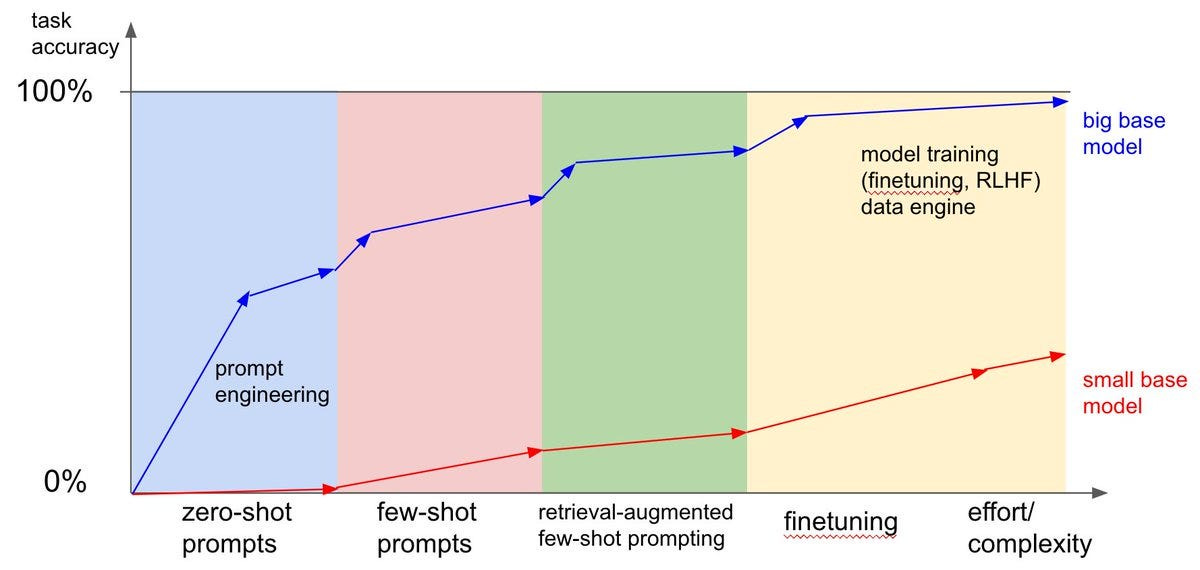
This means large companies will seek to train their own models in-house. However, before everyone rushes to train their own models, great prompt engineering can often accomplish what a fine-tuned model can, and better.
It’s important to remember how good the big base models already are (and getting better).
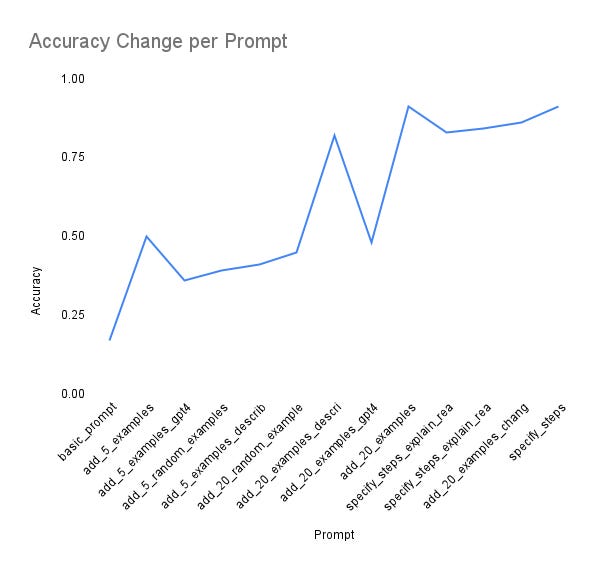
Adding 20 examples and specifying clear steps go a long way toward improving outputs without the need for expensive fine-tuning.
The third way to increase LLM output quality is through using RAG (Retrieval-Augmented Generation). RAG connects a language model to an external knowledge base e.g. company’s internal documents.
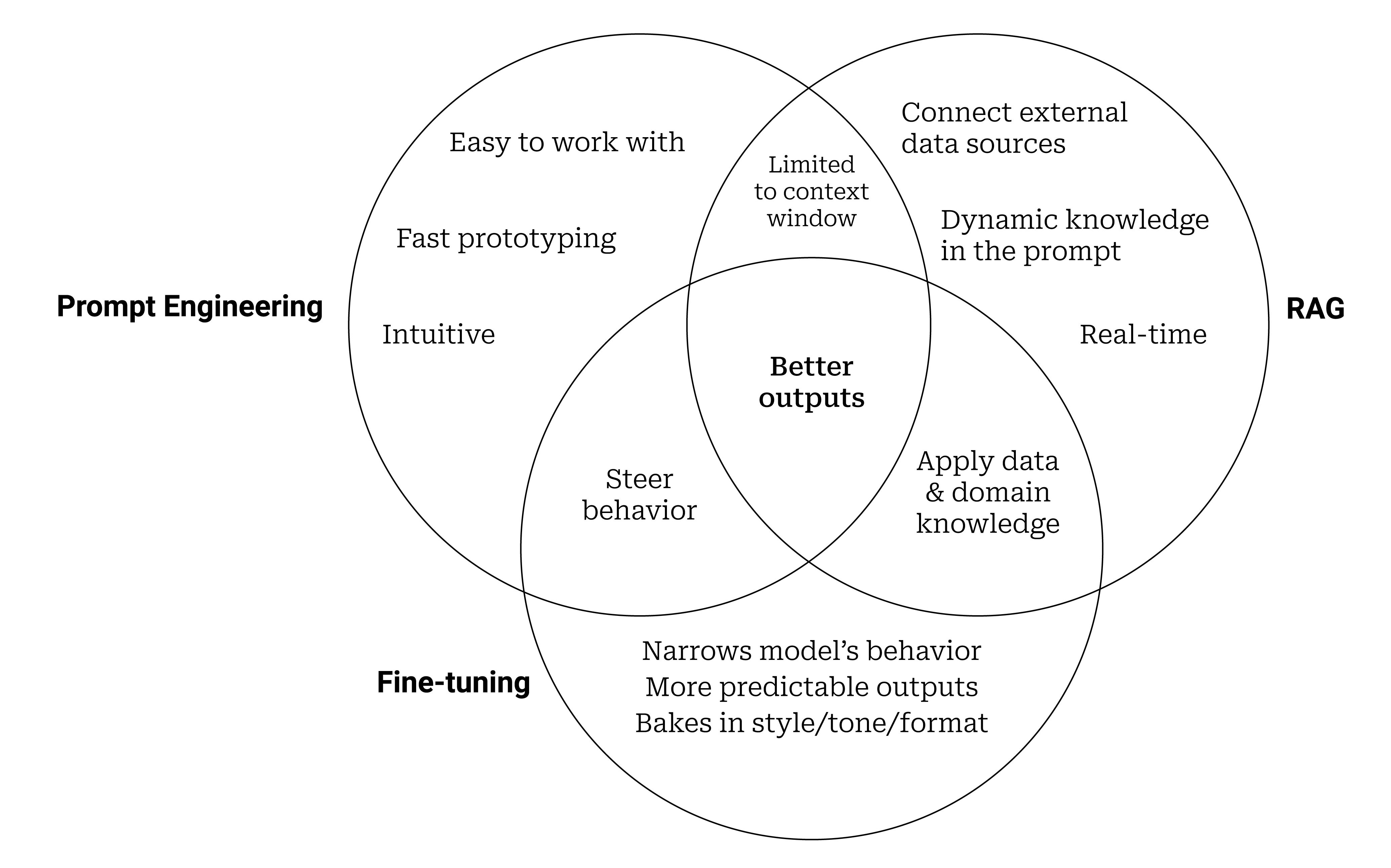
So the three main ways to increase LLM output quality are:
Prompt Engineering: Clear instructions, examples, and step-by-step guidance
Fine-tuning: Custom training on domain-specific data (often unnecessary with good prompting)
RAG (Retrieval-Augmented Generation): Connecting language models to external knowledge bases like company internal documents
3. Customer Acquisition Cost Will Keep Rising
Initially, advertising costs will decrease as B2C brands won’t need expensive, time-consuming photoshoots. This is especially beneficial for small, up-and-coming brands (as previously shown). This is also a net positive as creativity and taste, not production cost, will become the bottlenecks for brand marketing.
However, as the barrier to entry lowers, customer acquisition costs will likely increase (more brands targeting the same audiences). As every creative becomes AI-generated, I believe we’ll see a shift back to more analog forms of advertising.
We’ve seen similar pendulum swings: social media excess followed by “dumb phones” and a renewed appetite for real experiences; old “soulful” music getting sampled again; and a minimal, old-money aesthetic rising after a logo-heavy fashion era.
When everything looks AI-generated, people will assume everything is AI, which will further disincentivize brands from shooting “real” commercials or using real models. The key sources of authenticity will once again become physical spaces, events, word of mouth, and trusted human influencers.
Summary: The Path Forward
The numbers tell the story: enterprise AI spending hit $37 billion in 2025, up from $11.5 billion in 2024, a 3.2x increase. The gap between large and small businesses is closing fast: in February 2024, large businesses used AI at 1.8x the rate of small businesses, but as of this writing, the two are nearly equal.
AI represents the low-hanging fruit for inefficient companies. AI systems can increase productivity by 25-55%, with some organizations achieving 30%+ EBITDA improvements through increased volume (outreach, content, analysis) and cost-cutting (replacing individuals).
What’s improving: Backend systems, accuracy, context awareness, and eventually, robots.
What remains crucial: Trust, branding, real people, taste, and well-designed systems.
The organizations that win will be those that recognize AI as a backend revolution, one that creates new economies of scale based on intelligence rather than physical resources. The question isn’t whether AI will transform your industry, but whether you’ll be among those who harness it effectively or those left behind.
I do AI audits and automations, reach out if you want to discuss how to implement these strategies in your business.
Just reach out to me on LinkedIn.
Join for emerging tech insights from strategy to implementation. Trusted by Dior, JPMorgan, and Nike. Because after all, Jeff Bezos found the idea for Amazon via a newsletter just like this.